How to Drink More Water: Simple Habits That Stick
The easiest way to drink more water is to make it the default: carry a bottle, have a glass with every meal, and tie drinks to things you already do each day. Swapping sugary drinks for water and adding a slice of lemon or lime help too. Be patient, because in research on everyday habits, new routines took about 66 days on average to feel automatic, with a range of 18 to 254 days.
Start with a realistic goal
It helps to know roughly what you're aiming for. The US National Academies set an adequate intake for total water, from drinks and food together, of about 2.7 liters (about 91 fl oz) a day for women and 3.7 liters (about 125 fl oz) for men. Drinks provided about 2.2 liters (74 fl oz) and 3.0 liters (101 fl oz) of that, and food the rest.
These are reference values, not rules you have to hit to the milliliter. The same report notes that for most healthy people, thirst plus the drinks they have with meals keeps them normally hydrated, and that people who are physically active or exposed to heat need more. For the full picture, including children, pregnancy and breastfeeding, see how much water you should drink a day.
If a doctor has told you to limit fluids (for example for heart failure or kidney disease), follow their limit rather than general advice.
Habits that make drinking water easier
Keep water within reach
One of the CDC's tips is simple: "Carry a reusable water bottle with you." A bottle on your desk, in your bag or by the sofa turns drinking into something you do without deciding to. If you like your water cold, the CDC also suggests freezing water in freezer-safe bottles for ice-cold water all day.
Drink with every meal
Meals are a ready-made reminder. The CDC recommends serving water during meals and choosing water when you eat out. A glass with breakfast, lunch and dinner adds three drinks to your day before you count anything else.
Link water to things you already do
In a well-known study of how habits form, volunteers repeated one new behavior every day in the same situation. You can borrow that idea: pick a few moments that already happen every day and attach a drink to each:
- A glass when you get up, before coffee or tea.
- A refill each time you sit down at your desk.
- A drink while the kettle boils or dinner cooks.
- A glass when you get home.
Start with one or two anchors. Once they feel natural, add another.
Spread it through the day
The NHS advises drinking "regularly throughout the day." Small, regular drinks are easier to keep up than trying to catch up in the evening, and they avoid drinking a large amount in one go.
Make water taste better
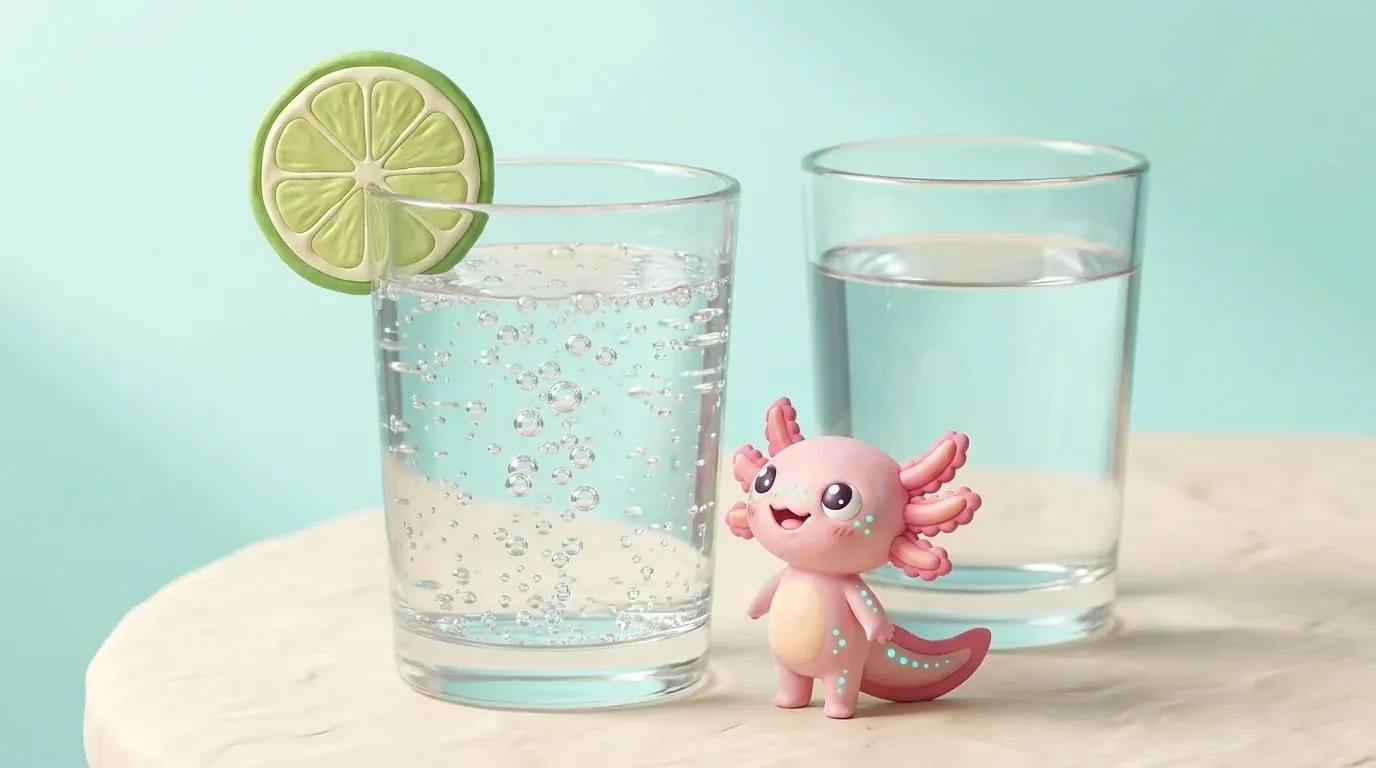
If plain water bores you, the CDC suggests adding a wedge of lime or lemon, a few berries or slices of cucumber. The NHS suggests trying sparkling water, a no-added-sugar drink, or a slice of lemon or lime. Plain sparkling water counts just like still water; see is sparkling water hydrating for the details, including what flavored versions mean for your teeth.
Choose water over sugary drinks
The CDC says that "replacing sugary drinks with plain water can help reduce caloric intake," and that sugary drinks are the leading source of added sugars in the American diet. Here's how a few common drinks compare, per the CDC:
| Drink, per 355 ml (12 fl oz) | Sugar | Calories |
|---|---|---|
| Plain water | 0 tsp | 0 |
| Unsweetened tea | 0 tsp | 0 |
| Sports drink | 5 tsp | 97 |
| Brewed sweet tea | 7 tsp | 115 |
| Energy drink | 9 tsp | 162 |
| Regular soda | 10 tsp | 155 |
| Fruit juice drink | 10 tsp | 186 |
You don't have to give anything up overnight. Replacing one sugary drink a day with water is a real change. The NHS also suggests limiting fruit juice and smoothies to one small glass of 150 ml (5 fl oz) a day, with a meal.
Count what you already drink and eat
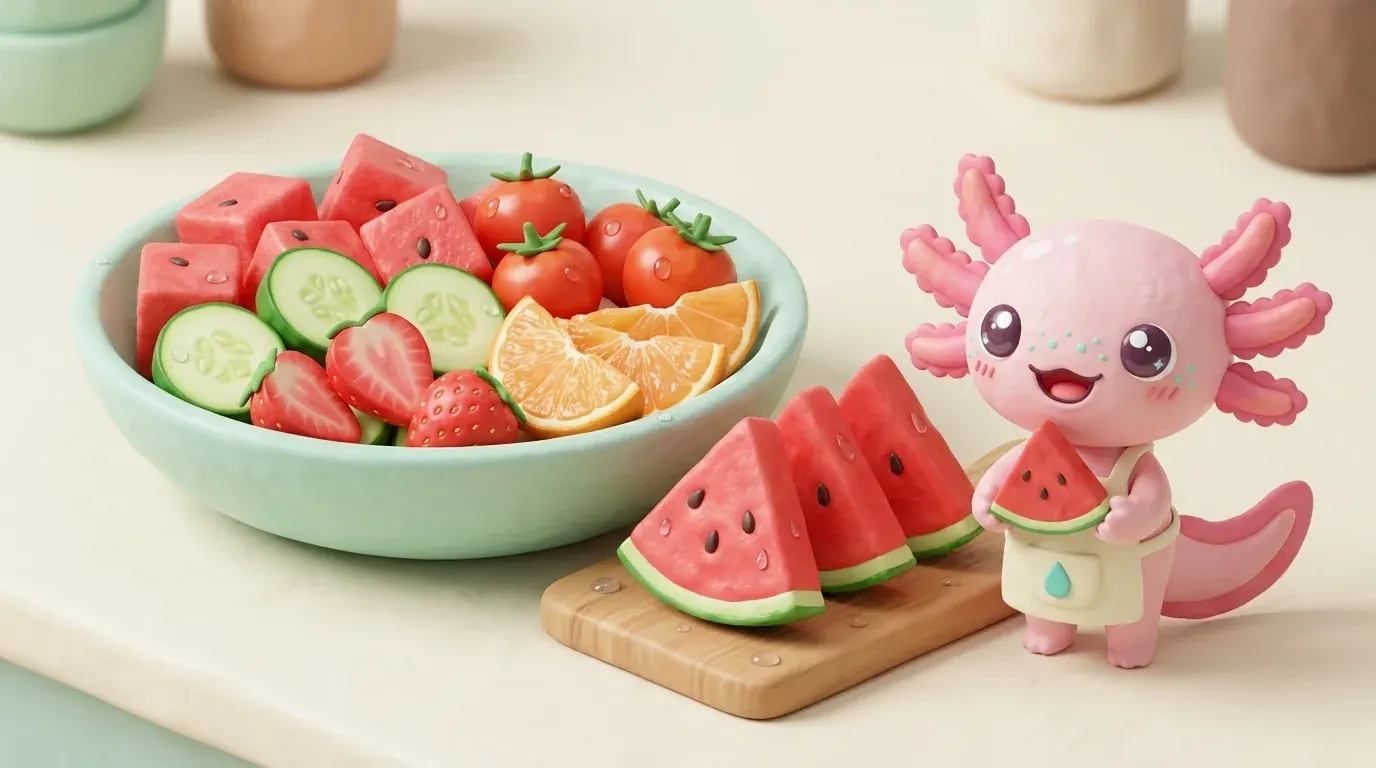
You're probably not starting from zero. The NHS says tea and coffee count toward your daily intake, along with water and lower-fat milk. Food counts too: in the US National Academies' report, about 20% of total water came from food. Foods with a lot of water in them add to it; see foods with high water content.
Use reminders and a simple log
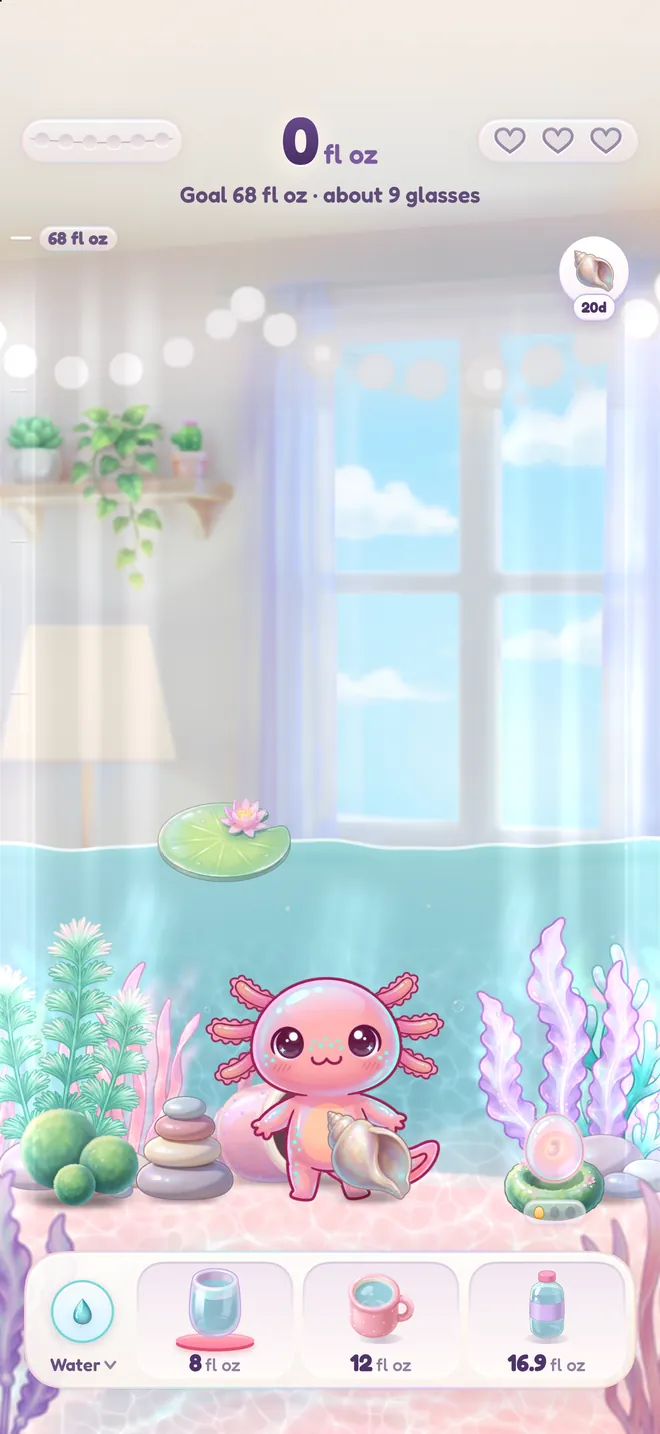
A reminder can carry a new habit through the weeks before it sticks, and a quick log shows you how the day is really going. You can set alarms, mark a bottle, or use an app. Hydrolotl, our water tracker for iPhone, iPad and Apple Watch, sends reminders with quiet hours, and every drink you log fills a pet axolotl's tank. Spreading drinks through the day makes its gills bloom, and a missed day never resets your progress. For other ways to keep count, see how to track your water intake.
Why the habit takes time
In the study mentioned above, by Lally and colleagues, 96 volunteers each chose an eating, drinking or activity behavior to do daily for 12 weeks. The time it took to become close to automatic ranged from 18 to 254 days, and habit strength leveled off after an average of 66 days. Simple actions such as drinking water became automatic faster than more complex ones.
Two findings are worth keeping in mind:
- It takes weeks, not days. If drinking more still feels like effort after a couple of weeks, that's normal.
- One slip doesn't undo it. Missing a single day "did not materially affect the habit formation process." If you forget your bottle on Tuesday, just pick it up again on Wednesday.
When thirst isn't enough
For most healthy people, thirst is a good guide. It works less well in some situations. The National Academies note that thirst and fluid intake are impaired in older adults, so a routine (a glass with each meal, a bottle in view) can matter more as you get older. In hot weather or during long exercise, you'll also need more than usual.
FAQ
What is the easiest way to drink more water?
Keep a reusable bottle where you can see it and drink a glass with every meal. Those two habits alone add several drinks a day without much thought.
How long does it take to make drinking water a habit?
In a study of everyday habits, it took about 66 days on average, with a range of 18 to 254 days. Simple habits like drinking water tended to become automatic faster, and missing one day didn't set people back.
Do tea and coffee count toward drinking more water?
Yes. The NHS says water, lower-fat milk and lower-sugar drinks, including tea and coffee, all count as part of your daily intake.
Is it bad to drink a lot of water at once?
It's better to spread drinks out. The US National Academies note that healthy kidneys can clear at most about 0.7 to 1.0 liters (about 24 to 34 fl oz) of water an hour, and dangerous cases have involved drinking large amounts far faster than that.
Sources
- CDC (2026). About Water and Healthier Drinks
- CDC (2026). Rethink Your Drink
- NHS (accessed 2026). Water, drinks and your health
- Institute of Medicine, National Academies (2005). Dietary Reference Intakes for Water, Potassium, Sodium, Chloride, and Sulfate, chapter 4: Water
- Lally et al. (2010). How are habits formed: Modelling habit formation in the real world
- Gardner et al. (2012). Making health habitual
This article is general information, not medical advice. If you have a health condition or your doctor has given you a fluid limit, follow their advice.