Does Coffee Count as Water Intake? What the Research Says

Yes. For most healthy adults, coffee and tea count toward your daily fluid intake: both the NHS and the US National Academies include them, and studies that compared moderate coffee drinking with water found no difference in hydration. What limits how much coffee you drink is the caffeine, not the water.
What health authorities say
The NHS is direct about it: "Water, lower-fat milk and lower-sugar drinks, including tea and coffee, all count as part of your daily intake."
The US National Academies reached the same view when they set reference values for water in 2004. About 80% of the water people take in comes from drinks, "including caffeinated beverages." Announcing the report, they noted that caffeine's effect on urine "may be transient" and that "there is no convincing evidence that caffeine leads to cumulative total body water deficits."
Where the "coffee dehydrates you" idea comes from
Caffeine has a reputation for sending you to the bathroom, so many people assume a cup of coffee cancels out its own water. For the amounts most people drink, the evidence doesn't support that. Summarizing earlier research, a 2016 paper by Maughan and colleagues stated that "an acute dose of less than 250-300 mg of caffeine is unlikely to have a measurable effect on urine output." That's more than the caffeine in a typical cup, as the table below shows.
What the studies found
Coffee versus water in regular coffee drinkers
A 2014 study followed 50 men who usually drank 3 to 6 cups of coffee a day. Each took part in two 3-day trials. In one, they drank four 200 ml (about 7 fl oz) mugs of black coffee a day, which gave them 4 mg of caffeine per kg (about 1.8 mg per lb) of body weight a day in total. In the other, they drank the same volume of water.
The researchers found no differences in total body water, 24-hour urine volume, or blood and urine markers of hydration. They concluded that coffee, "when consumed in moderation by caffeine habituated males provides similar hydrating qualities to water."
Keep the limits in mind. Everyone in the study was male, used to caffeine and drinking a moderate amount, so the results may not apply to women, to people who rarely drink coffee, or to much larger amounts. One of the authors worked for a drinks company, which the paper declared.
The Beverage Hydration Index
In the 2016 study by Maughan and colleagues, 72 well-hydrated men each drank 1 liter (about 34 fl oz) of a test drink over 30 minutes on an empty stomach. The researchers then collected their urine for 4 hours and compared each drink with plain water, which was given a score of 1.0.
Over those 4 hours, urine output after coffee, hot tea, iced tea, cola, diet cola, orange juice, sparkling water and a sports drink was not different from water. The coffee in the study contained 212 mg of caffeine per liter, and the authors "did not observe an impact of moderate caffeine intake (96-212mg) on net fluid balance."
A few drinks did score higher than water at 2 hours, meaning people passed less urine after them: full-fat milk (1.50), skimmed milk (1.58) and an oral rehydration solution (1.54).
This study has limits too: only men took part, each drink was a single large serving on an empty stomach, and it was funded by the European Hydration Institute.
How much caffeine is OK?
Since water isn't the issue, the sensible limit on coffee is a caffeine limit. The European Food Safety Authority (EFSA) concluded in 2015 that for healthy adults:
- Single doses of up to 200 mg (about 3 mg per kg for a 70 kg, or 154 lb, adult) do not raise safety concerns.
- A habitual intake of up to 400 mg a day does not raise safety concerns for adults who are not pregnant.
Here is how much caffeine EFSA lists for typical servings:
| Drink | Typical serving | Caffeine |
|---|---|---|
| Espresso | 60 ml (2 fl oz) | 80 mg |
| Filter coffee | 200 ml (about 7 fl oz) | 90 mg |
| Black tea | 220 ml (about 7.4 fl oz) | 50 mg |
| Cola | 355 ml (12 fl oz) | 40 mg |
| Energy drink | 250 ml (about 8.5 fl oz) | 80 mg |
Using those typical values, 400 mg is roughly four 200 ml cups of filter coffee or five espressos. Real servings vary, and a large mug holds more than 200 ml, so treat the numbers as a rough guide.
Tea, milk and energy drinks
Tea counts just like coffee. It usually has less caffeine per cup by EFSA's figures (about 50 mg for black tea against 90 mg for filter coffee), and in the hydration index study both hot and iced tea were no different from water.
Milk scored higher than water in that study, and the NHS lists lower-fat milk among the drinks that count, so the milk in your coffee or tea counts too.
Energy drinks contain about 80 mg of caffeine per 250 ml (about 8.5 fl oz) can, according to EFSA, as much as an espresso. If you drink them alongside coffee, the caffeine adds up quickly, so check the label for both caffeine and sugar.
Pregnancy, breastfeeding and children
The NHS advises: "do not have more than 200mg of caffeine a day if you're pregnant." EFSA set the same 200 mg a day for pregnancy and breastfeeding. By EFSA's typical values, that's about two 200 ml cups of filter coffee or four cups of black tea. If you're pregnant or breastfeeding, your midwife or doctor can help you plan around it.
For children and teenagers, EFSA found the information "insufficient to derive a safe caffeine intake." It proposed 3 mg per kg (about 1.4 mg per lb) of body weight a day as a basis.
What this means for your daily total
If you drink coffee or tea, you can count it toward your fluids. Plain water is still a good main drink, because it has no caffeine and no sugar. For how much fluid you need in total, see how much water you should drink a day, and for why the old rule of thumb is only a rough guide, see 8 glasses of water a day. Sparkling water counts as well; see is sparkling water hydrating.
If you're ill with vomiting or diarrhea, see signs of dehydration for what to drink. And if a doctor has told you to limit fluids (for example for heart failure or kidney disease), follow their limit rather than general advice.
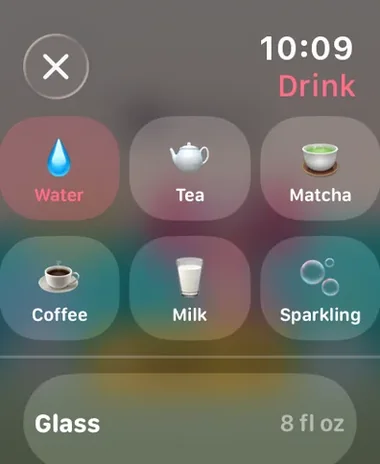
In Hydrolotl, you can log coffee, tea, matcha, milk and sparkling water as well as water. Each drink counts by how much it adds to your water for the day: water counts in full, some drinks count a little less, and the Today screen shows both numbers. With Apple Health turned on, the app can also save your caffeine there.
FAQ
Does coffee dehydrate you?
For most healthy adults drinking moderate amounts, no. In a 2014 study of men who regularly drank coffee, four mugs of coffee a day hydrated as well as the same amount of water, and the US National Academies found no convincing evidence that caffeine causes lasting fluid loss.
Does tea count as water intake?
Yes. The NHS counts tea toward your daily intake, and in a 2016 study both hot and iced tea were no different from water in how much urine people passed afterward.
How much coffee a day is too much?
EFSA says a habitual intake of up to 400 mg of caffeine a day raises no safety concerns for healthy, non-pregnant adults, which is roughly four 200 ml (about 7 fl oz) cups of filter coffee. For pregnancy and breastfeeding, EFSA's figure is 200 mg a day.
Do I need to drink extra water to make up for coffee?
Not for hydration's sake: in the studies above, moderate amounts of coffee hydrated about as well as water. If a glass of water next to your coffee helps you drink more water overall, it's still a good habit.
Sources
- NHS (accessed 2026). Water, drinks and your health
- National Academies (2004). Report Sets Dietary Intake Levels for Water, Salt, and Potassium to Maintain Health and Reduce Chronic Disease Risk
- European Food Safety Authority (2015). Scientific Opinion on the safety of caffeine
- European Food Safety Authority (accessed 2026). Caffeine
- Killer et al. (2014). No evidence of dehydration with moderate daily coffee intake: a counterbalanced cross-over study in a free-living population
- Maughan et al. (2016). A randomized trial to assess the potential of different beverages to affect hydration status: development of a beverage hydration index
This article is general information, not medical advice. If you have a health condition or your doctor has given you a fluid limit, follow their advice.